Environmental NGOs in India: The Real People Doing the Hard Work
Environmental NGOs in India work to protect the environment, reduce pollution, and save wildlife and forests through awareness and ground-level projects.
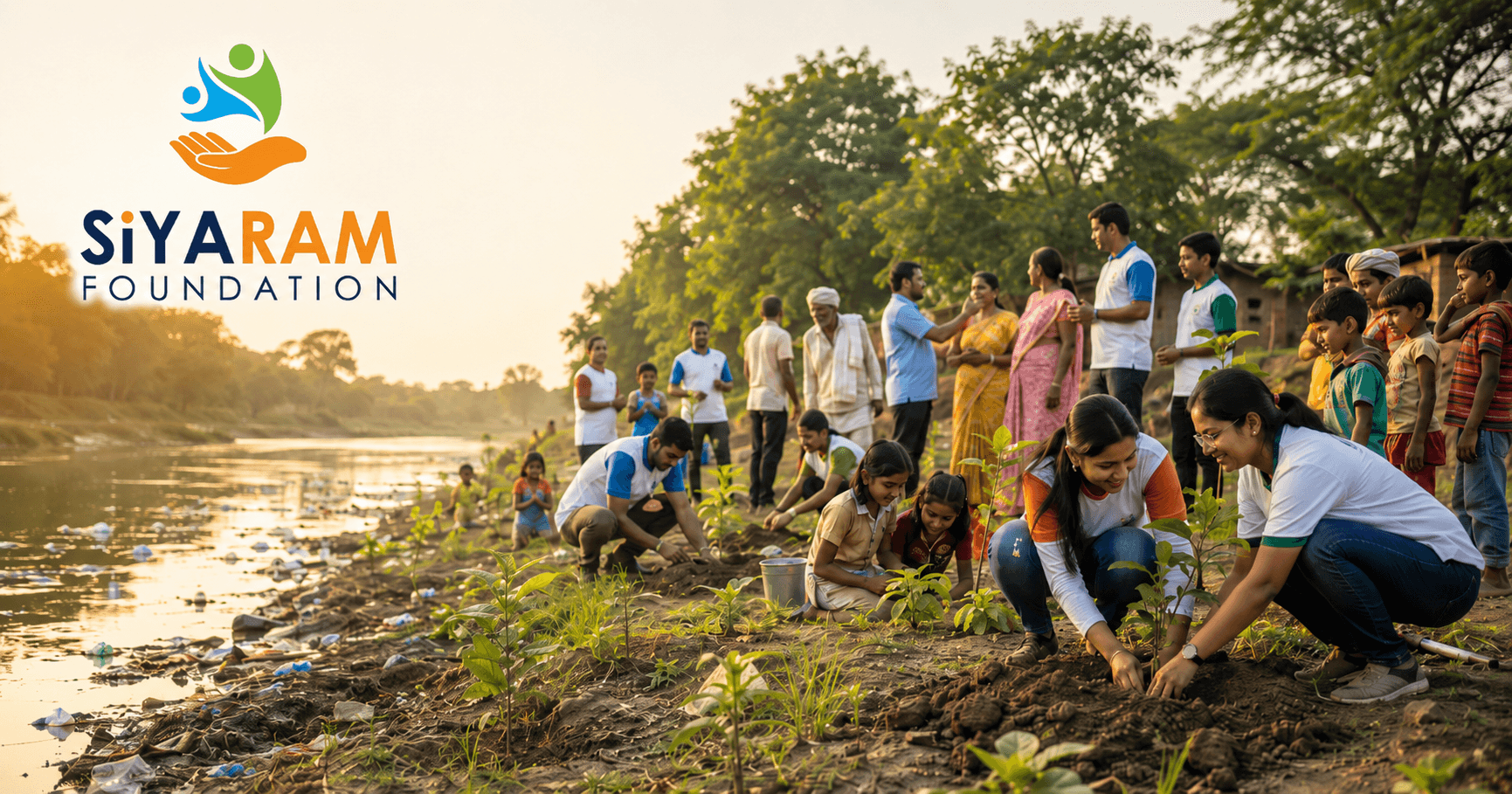
Last monsoon, a friend of mine sent me a photo. Just like that, no context.
It was a lake. Somewhere near her town in Gujarat.
I had to zoom in to believe it. The water was this dark, muddy brown , and not the kind you see after heavy rain. This was different. Thick. Still. Like it had been that color for years.
She texted after: "Does anyone even care about this?"
I didn't reply immediately. Because honestly, I wasn't sure what to say.
But the answer is, yes. Someone does. A lot of someones, actually. Environmental NGOs in India have been working on exactly this kind of problem for years. Most of them do it without recognition, without viral posts, without anyone really noticing.
That's what this blog is about.
What Does an Environmental NGO Even Do?
Okay so when most people hear "NGO," they think, tree plantation. Matching t-shirts. One Sunday. Instagram post. Done.
And look, that does happen. But that's maybe 2% of the actual work.
NGOs working for environment in India are dealing with stuff that's way messier than that. A village where the river has been dumped into for 15 years and nobody upstream cares. A farming community where the groundwater is contaminated but people are still drinking it because they don't know. Kids growing up next to a garbage dump because the municipality never bothered to fix it.
Real work looks nothing like the photos.
Someone is knocking on doors in a village, trying to explain, in the local dialect, why burning plastic is dangerous. Someone else has been chasing the same government file for four months just to get one illegal factory fined. A teacher volunteer is sitting on the floor with ten-year-olds, trying to make them actually feel something about a dying river.
No cameras. No audience. Just the work.
Why India Needs These Organizations More Than Ever
Let me put something out there that rarely gets said plainly.
India is genuinely one of the most beautiful countries on earth. The Himalayas. The Western Ghats. The Sundarbans. Places that make you stop and just stare.
And we're slowly ruining them.
Delhi winters now come with air quality warnings. Kids in some cities grow up thinking a hazy sky is normal ,because for them, it is. Rivers like the Yamuna carry so much industrial waste that calling them "rivers" feels generous. Forests are being cleared faster than anyone is replanting them. Glaciers up north are melting at a pace that should scare us more than it does.
Laws exist. Rules are written down. But in a country this size, enforcement is a whole different story.
That's the gap. And environmental protection NGOs in India are the ones trying to fill it, not because someone told them to, but because someone had to.
The Approach That Actually Works
Involving the Community from Day One
Here's something most people don't realize about failed environmental programs the problem usually isn't money or effort. It's that nobody asked the community what they actually needed.
An outsider walks in, plants 500 saplings, clicks some photos, and leaves. Six months later, those saplings are dead. Nobody watered them. Nobody felt responsible for them. Why would they? Nobody asked them if they even wanted trees there.
The Indian environmental organizations that are getting results do something different. They sit down with the village first. They ask questions. They let people decide where the trees go, who waters them, who keeps track. And then, this is the part that matters, people actually show up.
Because you protect what you helped build. Simple as that.
Read More: NGO Organization in India
Getting Women Involved
This surprised me too when I first read about it.
But across states,Gujarat, Rajasthan, Uttarakhand, Karnataka, the pattern keeps showing up. When women are part of the decisions around water and land and forests, things go better. Water gets used more carefully. Less gets wasted. Forests last longer.
It's not complicated when you think about it. Women in most rural households are the ones managing water every day. Collecting it, rationing it, using it. They know exactly where it's running out and why. When you include them in solving the problem, they bring real knowledge with them, not theory.
Starting Young
A kid who grows up caring about a river will be an adult who doesn't dump garbage in one.
That's it. That's the whole argument.
Some of the top environmental NGOs in India figured this out years ago. Their school programs aren't lectures about climate change. They're simple, hands-on things, planting something and watching it grow, cleaning up a local spot and seeing the difference. Small things that make a child feel something real.
That feeling sticks. For decades.
Environment and Community: Same Problem, Not Two
People often treat environmental work and social work as separate departments. Like you either care about trees or you care about people.
That thinking doesn't hold up on the ground.
Talk to a family whose only water source got contaminated by a factory upstream. Ask them if their health problem and their environment problem feel like separate things. They don't. It's one problem, it just has many faces.
This is exactly why Siyaram Foundation doesn't run an "environment program" sitting separately from everything else. Our tree plantation work, our waste awareness drives, they grow out of the same mission as our education and healthcare work. Because the communities we work with don't experience life in separate departments either.
We're in 35+ districts. And in every single place, we've learned the same thing, you can't fix one piece without caring about the rest.
Common Mistakes NGOs Make: And What Actually Works
Not every program works. Most people won't admit that, but it's true.
Some things sound great in a proposal and fall completely flat in real life. A few honest ones worth mentioning:
-
Planting trees and never coming back, a sapling without follow-up is just a stick in the ground
-
Ignoring what locals already know, villagers have watched their land for generations. Listen to them first
-
Talking over people's heads, if the message doesn't land in simple words, it doesn't land at all
-
Treating environment as separate from income and health, it never is
The NGOs that keep going and keep improving are the ones willing to say "that didn't work, let's try something else."
How You Can Actually Help
You don't have to move to a village or chain yourself to a tree.
Small things genuinely matter when enough people do them:
-
Give a little regularly — ₹200 a month sounds small. Multiply it by a thousand people and it funds a real program
-
Show up somewhere — a local clean-up, a plantation drive, anything. Physical presence matters
-
Cut down on plastic where you can — not perfectly, just more than yesterday
-
Talk about it at home — the people around you are influenced by you more than you think
-
Share content from environmental protection NGOs in India reach is real, and most of these organizations have almost none
If Siyaram Foundation's work resonates with you, donate through our website or come volunteer. We're not a big glossy organization. We're just people showing up every day.
Conclusion
Environmental NGOs in India are not trending. They're not making reels that go viral. Most of them are just quietly, stubbornly doing the work, in the heat, in remote areas, with whatever budget they have.
That lake in Gujarat my friend photographed? I genuinely believe someone is already working on it. Maybe filing a complaint nobody wants to hear. Maybe organizing a clean-up that three people will show up to. Maybe teaching kids nearby why it matters.
They won't be on the news. But they'll be there.
If reading this made something shift even slightly, act on that. Support an organization. Tell someone. Do one thing differently.
That's how it actually changes.
FAQs
1.What are environmental NGOs in India and what do they do?
Environmental NGOs in India are non-profit groups working on the ground to fight pollution, deforestation, water contamination, and climate impact. They go where government programs often can't reach, villages, tribal areas, small towns, and they work directly with people, not just on paper.
2.Which are some of the top environmental NGOs in India?
A few well-known names, Greenpeace India, WWF India, Centre for Science and Environment, Bombay Natural History Society. But honestly, some of the most important work is being done by smaller Indian environmental organizations that you've probably never heard of. Siyaram Foundation is one of them.
3.How are NGOs working for environment in India different from government bodies?
Government bodies write the rules. NGOs working for environment in India go out and deal with what's actually happening, often in places and with communities that policy never quite reaches. They're faster, more local, and more flexible.
4.Can I volunteer with an environmental NGO even if I have zero experience?
Yes. Genuinely. Most organizations just need people who show up. No degree, no special background needed. At Siyaram Foundation, volunteers come from all walks of life. If you're interested, visit our Get Associated page and reach out.
5.How does Siyaram Foundation contribute environmental protection?
Tree plantation drives, waste awareness programs, eco-education in schools, across 35+ districts. We don't do it as a side project. Environment is part of how we think about community well-being altogether. That's what makes us one of the top environmental NGOs in India working at the grassroots level.