Girl Child Education in India: Importance, Challenges and Ways to Improve
Girl child education in India has improved significantly over the years, but many girls still face barriers that prevent them from completing their education. From financial difficulties and social expectations to safety concerns and limited resources, the challenges remain real. This article explores the current status of girls' education in India, why it matters, the obstacles many girls face, and practical steps families, schools, communities, and NGOs can take to help every girl stay in school and reach her full potential.
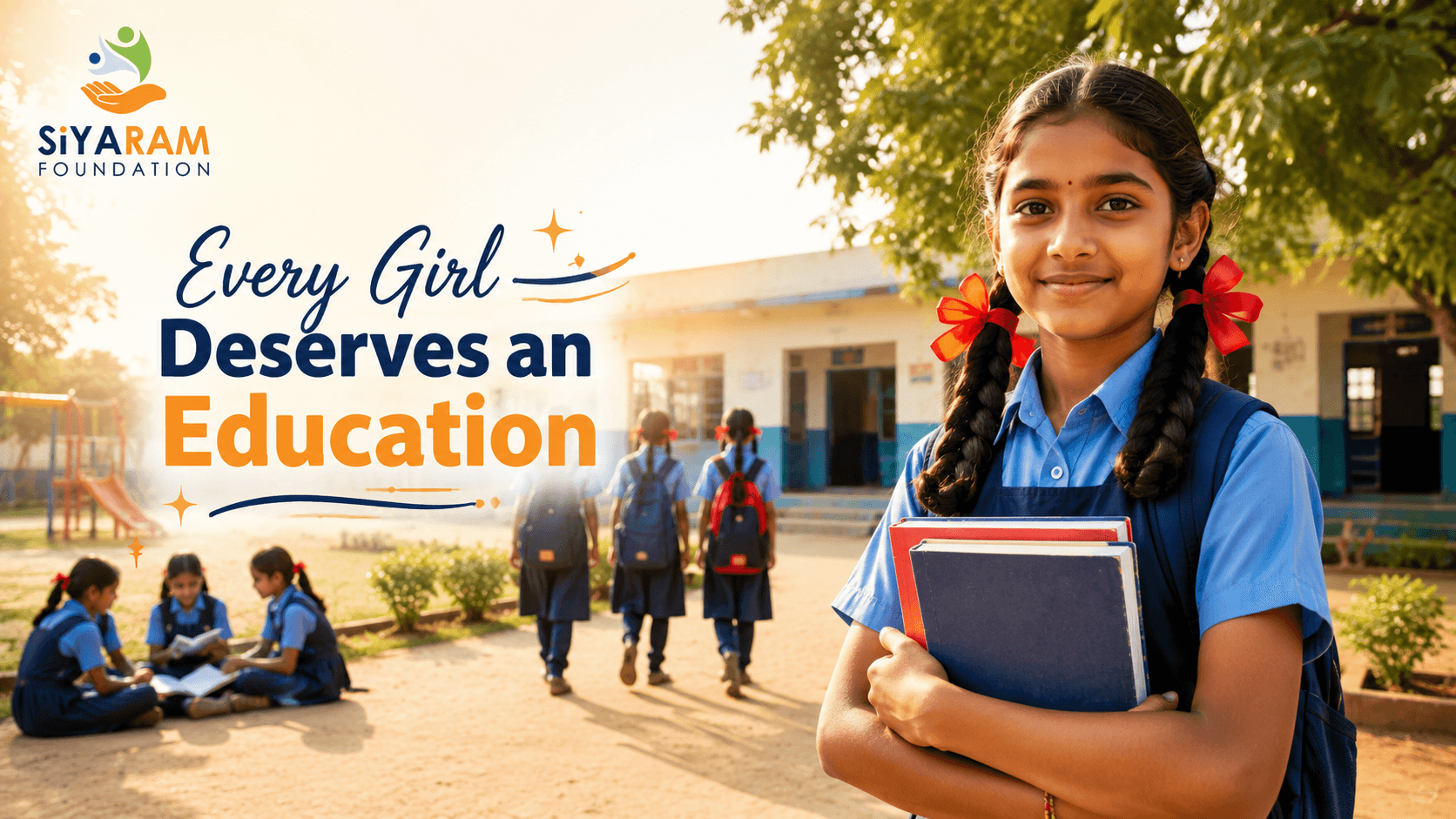
In a lot of Indian homes, getting a daughter admitted to school is really just the beginning, not the finish line. She's enrolled, she's got her uniform, she picks up her bag and walks to school every morning. But then something happens a family emergency, a bus stop that doesn't feel safe, a fee that just can't be paid that month and quietly, without much fuss, she stops going. This is the everyday reality behind girl child education in India admission alone doesn't finish the job. What actually matters is whether she keeps showing up, whether she can get there safely, and whether her own family truly believes her education is worth fighting for. That's what this blog looks at where things stand today, why it matters so much, what keeps pulling girls out of school, and what can actually be done to change that.
What Is the Status of Girls' Education in India?
Girls' school enrolment in India is slowly rising, but dropout still climbs sharply once girls move from middle school into secondary classes. The picture right now is mixed some things are getting better, some gaps are still there.
Government data (UDISE+ 2024-25, Ministry of Education) shows that more girls are joining school now than before. Enrolment rose slightly, from about 11.93 crore in 2023-24 to a similar number in 2024-25. This shows that the gap between boys and girls joining school is slowly closing. Looking at daily attendance, NFHS-5 (2019-21) found that 86.5% of girls aged 6-17 were going to school regularly, compared to 88.2% of boys. The gap here is small.
The real problem shows up later, as girls grow older. In 2023-24, about 10.9% of girls dropped out at the secondary level (Classes 9-10). This improved to 8.2% in 2024-25, which is good news. But the drop-out rate still jumps once girls move from middle school into secondary school. NFHS-5 also found that among children who had left school, 13.3% of girls stopped going because of housework, and 6.8% had already been married. Boys rarely leave school for these reasons.
So, in simple words: more girls are joining school than ever before. The hard part is making sure they stay in school all the way through secondary level.
Why Is Girl Child Education Important?
Girl child education is important because it gives a girl financial independence, better health awareness, and a real say over decisions like marriage, work, and further study. It isn't just about exam scores the importance of girl child education shows up in ways that go well beyond the classroom.
-
She gets to decide for herself : what to study next, what work to do, and when (or whether) to marry, instead of others deciding for her.
-
She's more likely to earn her own money : An educated woman is far more likely to find paid work and support her household, instead of depending entirely on someone else.
-
She takes better care of her health, and her family's : Educated women generally know more about nutrition, hygiene, and maternal care and that knowledge passes on to their children too.
-
She marries later, not as a child : The data backs this up. NFHS research shows that every extra year a girl stays in school pushes her age at marriage higher. NFHS-6 (2023-24) found that 20.1% of women aged 20-24 were married before 18 down from 23.3% in NFHS-5 (2019-21). That's real progress, but it's still a lot of young girls losing their childhood to marriage. Simply put, the longer a girl stays in school, the less likely this is to happen to her.
-
Her children benefit too, and so does her community : Educated girls grow up to raise educated kids, speak up in local decisions, and strengthen the community around them. The good this does doesn't stop with her it carries into the next generation.
Major Challenges Facing Girls' Education in India
The main problems faced by girls in education in India are financial pressure on families, household work, unsafe transport, early marriage, poor school sanitation, social bias, and limited digital access. There's rarely just one reason a girl drops out it's usually a few small pressures that pile up, until one day, she just stops going.
Financial Pressure on Families
School fees might be waived, but the extra costs aren't uniforms, books, transport, tuition. When a family is short on money, a son's education often gets picked first, on the assumption that a daughter will marry and move to another home anyway.
Household Work and Care Responsibilities
Many girls are pulled into daily chores cooking, cleaning, and watching over younger siblings while parents work. What begins as "just helping out" slowly eats into her school time, until she's fallen too far behind to bother going back.
Safety and Transport Problems
In many villages and small towns, the nearest secondary school can be kilometres away. Parents worry about the route unsafe roads, no proper transport and it's often easier to just keep her home than take the risk.
Early Marriage
In some families, getting a daughter married still feels more urgent than letting her finish school. Once the wedding is fixed, her education usually takes a back seat, and rarely comes back.
Lack of Toilets and Basic Facilities
It sounds like a small thing, but it isn't. Many schools still don't have a proper, working toilet for girls. Once a girl reaches her teenage years, this one gap alone is enough to make her stop attending regularly.
Social Bias Against Girls
In some homes, a daughter's education is quietly treated as less important than a son's not always said out loud, but felt in how resources and attention get divided, especially once money is tight or she hits her teens.
Limited Digital Access
Since the pandemic, a lot of learning happens through a phone or a screen. But in many low-income and rural homes, it's usually the brother who gets the phone first, leaving the sister behind digitally too.
How to Improve Girl Child Education in India
Girl child education in India improves when parents get real support safe transport, scholarships, better school sanitation, mentorship, and consistent follow-up on attendance before a girl drops out. There's no single fix, but a few things, done consistently, genuinely help.
-
Talk to parents: help them see their daughter's education as something worth investing in, not just a phase before marriage.
-
Make the commute safer: escorted transport, bicycles, anything that removes the fear of the daily journey.
-
Ease the money pressure: scholarships, free books, fee support.
-
Fix the basics: working, private toilets in every school.
-
Bring the community in: Local leaders and women's groups can shift how people think faster than a poster ever could.
-
Give her a mentor: someone she can turn to, especially during the harder teenage years.
-
Help her get online: shared devices or a local learning center can close the digital gap.
-
Check in regularly: notice when a girl's attendance starts slipping, and act before she's gone for good.
Real change here doesn't come from one big campaign. It comes from these small things, done again and again, at the school and community level.
How NGOs Can Help Girls Stay in School
NGOs help girls stay in school by identifying at-risk students early, providing learning materials, counselling parents, and offering mentorship alongside families and schools. A lot of this work is unglamorous and quiet, not instead of what families and schools already do, but in support of it.
Counselling parents is often where the real work happens, since most decisions about a girl's schooling are made at home, long before she ever reaches a classroom. Mentors give her someone to talk to when things get hard. And when a girl has already left school, NGOs often help her find a way back in through bridge courses or other support built for exactly that.
Siyaram Foundation works in this space too, focused on supporting underprivileged children and helping them access education. Broader educational support from an NGO for Child Education in India can help children overcome financial, social, and learning barriers that often stand between them and a completed education.
What Families and Communities Can Do
Families can improve girl child education by sharing household chores fairly, supporting regular attendance, and letting a girl complete her education before marriage is even discussed. Honestly, most of this starts at home, not in a classroom.
-
Split the chores fairly a daughter shouldn't be doing double the housework her brother does.
-
When she talks about a problem, at school or at home, actually listen to her.
-
Keep her attendance steady, even when things at home get hectic.
-
Let her finish her education first. Marriage can wait.
-
Give her a quiet, safe spot at home where she can actually sit and study.
-
Push her to finish secondary school, not just stop after primary.
None of this needs money or resources. It just needs families to keep choosing this, day after day, instead of letting it slide.
Final Thoughts
Fixing girl child education in India isn't something you do once and move on from. It takes steady effort, year after year families choosing to keep a daughter in school even when it's not convenient, schools making classrooms safer and more welcoming, and communities that stop treating a girl's education as something optional. The progress so far enrolment slowly rising, dropout rates slowly falling proves that change is genuinely possible. What's needed now isn't one big push. It's patience, and showing up for it consistently. Every extra year a girl gets to stay in school adds up to a better, stronger future for her, and for everyone around her.
Sources
The statistics used in this blog are drawn from the following official reports:
-
UDISE+ 2024-25 Report — Department of School Education & Literacy, Ministry of Education, Government of India
-
NFHS-5 (2019-21) Reports — Ministry of Health and Family Welfare, Government of India
-
NFHS-6 (2023-24) Fact Sheets — Ministry of Health and Family Welfare, Government of India
Follow Siyaram Foundation
Stay connected with Siyaram Foundation to see updates about child education, community work, awareness programs, and ways you can support children in need.
Follow us on: Facebook | Instagram
Frequently Asked Questions
1. What is girl child education?
It simply means a girl gets the same chance to learn as a boy would from her early years right through secondary school. It's not just about getting admitted either. It's about actually showing up every day, staying safe, and having the support to see it through to the end.
2. Why is girl child education important in India?
Because it gives a girl real choices over her work, her further studies, and when she wants to marry. It also means better health awareness at home and more money coming in. And an educated girl usually goes on to raise educated kids, so the benefit doesn't stop with her alone.
3. What is the status of girl child education in India?
Slowly getting better. UDISE+ 2024-25 data shows girls' enrollment ticking up a bit compared to the year before. The catch is dropout it still climbs once girls hit secondary school, often because of housework, early marriage, or money troubles at home.
4. What are the main challenges faced by girls in education?
Money troubles at home, being pulled into housework, unsafe or long commutes, early marriage, schools without proper toilets, families quietly favoring sons, and less access to phones or the internet compared to brothers in the same house.
5. How to improve girl child education in India?
By talking to parents about why it matters; making the daily commute safer; easing the cost with scholarships and supplies, fixing school sanitation; bringing the community in; giving girls mentors; and importantly, checking in on attendance before a girl drops out, not after.
6. What will happen if a girl child is not educated?
She ends up with far fewer choices later, less financial independence, a higher chance of being married off early, and less say over her own life. It doesn't stop there either her own children often end up with fewer resources too, since an uneducated mother has less to offer them.
7. How do NGOs support girl child education?
They spot girls who are likely to drop out, hand over books and learning material to those who can't afford them, talk to parents, offer mentoring, and support schools however they can. For girls who've already left, some NGOs help them find a way back in through bridge programmes.