Tree Plantation NGO in India: Why These Organizations Matter More Than Ever
Learn more about environmental conservation, sustainability initiatives, and how you can contribute to creating a greener and healthier future with Siyaram Foundation.
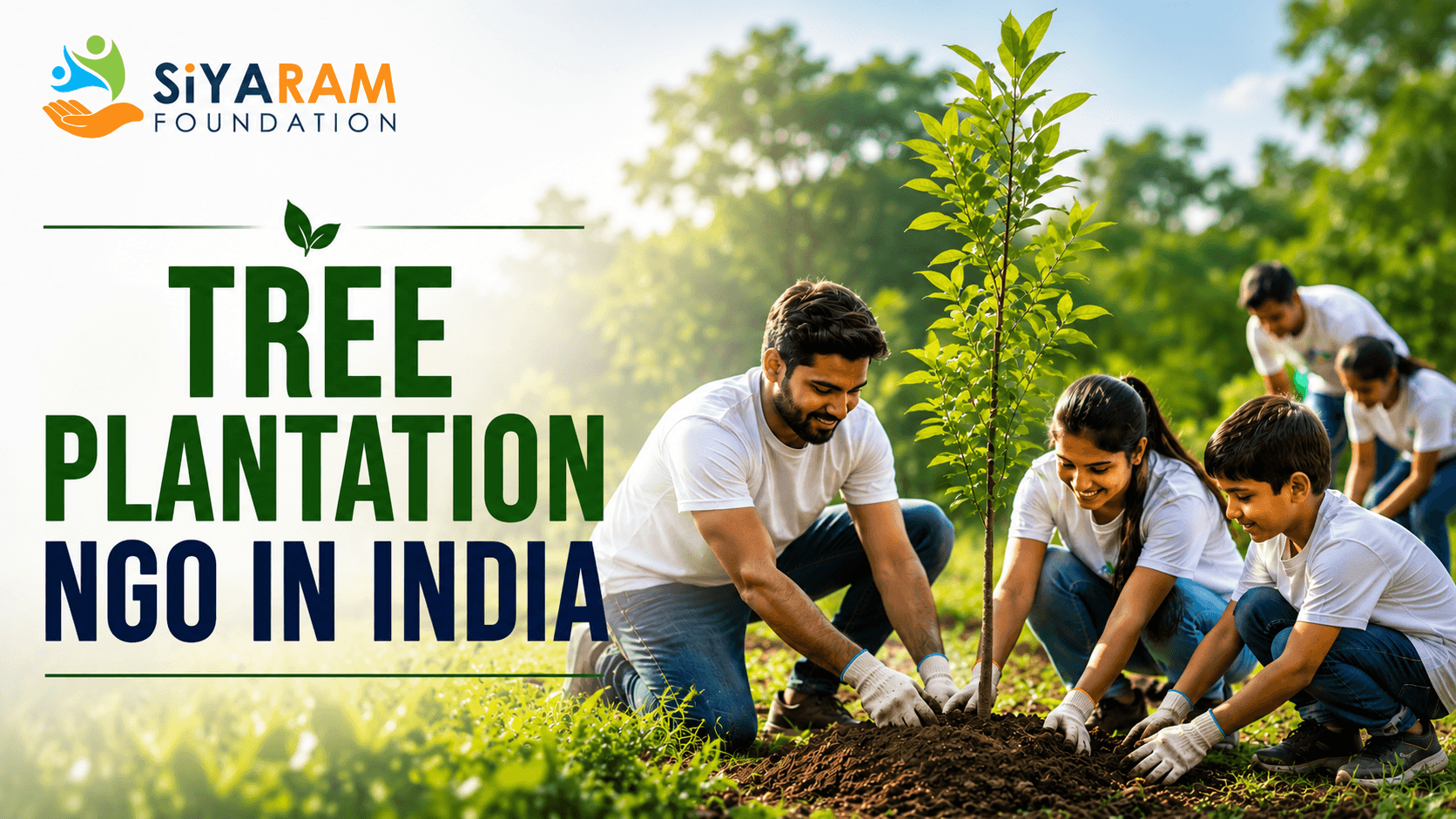
Type "Tree Plantation NGO" into Google and you'll get thousands of hits in seconds. Drives, campaigns, saplings, a hashtag or two. What's harder to find is the part that comes after the photo, once everyone's gone home.
Every year, India loses forest land to construction, mining, and the slow pressure of a changing climate. But there are also organizations quietly working the other side of that equation, not through one big event, but through years of showing up, checking back, and being honest about what worked and what didn't.
This piece is about what that work actually looks like, why it matters so much for India right now, and where Siyaram Foundation fits into it.
What is a Tree Plantation NGO?
At its core, a Tree Plantation NGO is a non-profit that works to grow India's green cover, by planting trees, protecting them, and helping people understand why that green cover matters in the first place.
Say those words out loud, though, and most people picture the same thing: matching t-shirts, a weekend event, a pile of saplings waiting to go into the ground. That's real, but it's also just the surface. The harder, less photogenic work looks more like this:
-
Species selection — choosing trees that actually belong in that soil and climate, not just whatever grows fastest for a good picture
-
Site preparation — testing the soil, checking water access, sorting out land permissions, long before anyone picks up a shovel
-
Community ownership — teaching the people who live there to water and protect the saplings once the volunteers are gone
-
Survival tracking — going back months later to see what actually made it, because a tree that dies within a year hasn't really changed anything
That last one gets skipped more than it should. A sapling nobody checks on is just a stick in the ground with good intentions attached. The NGOs actually moving the needle treat planting day as day one, not the finish line.
Why Tree Plantation is Important in India
Ask anyone who's sat through a recent Delhi winter whether climate change feels distant. It doesn't, not anymore. Heatwaves stretch on longer than they used to. Monsoons show up late, or dump a month's worth of rain in three days flat. People check air quality apps now the same way they check for rain. Trees won't fix all of that on their own, but they pull real weight in three ways: they soak up carbon, cool down the air around them, and help keep rainfall a little more predictable over time.
Losing a forest costs more than the trees themselves. A forest is really a whole web, birds, insects, small mammals, fungi, soil life, all of it working together to keep land fertile. Clear that away and the whole system starts to unravel, usually quietly, long before anyone's paying attention.
The soil and groundwater tell much the same story. Roots hold the ground together and slow water down as it runs off, which is a big reason fewer trees usually means worse flooding when the monsoon hits and drier land the rest of the year. That's not bad luck, it's just how hydrology works at scale.
None of this stays theoretical if you're a farmer. Families working the land are usually the first to feel it when soil quality drops or the weather stops behaving the way it always has, and often the last to have the resources to absorb that hit.
Afforestation won't undo everything that's already been lost. But it's one of the few things that touches all four of these problems at once, which is exactly why it keeps coming up as a starting point for serious environmental work in India.
Role of Environmental NGOs in India
Environmental NGOs exist largely because there's a gap, sometimes a fairly wide one, between what the law says and what actually happens on the ground. Laws around deforestation, pollution, and land use are on the books. Making sure they're actually followed, across a country this size, is a much harder ask.
That's roughly where NGOs step in. Their work tends to cover:
-
On-ground implementation — the actual planting, cleanup, and awareness work in places official programs don't always reach
-
Community education — explaining, in local language and local terms, why something like burning plastic or clearing a riverbank does real damage
-
Policy pressure — flagging violations, filing complaints, and holding authorities accountable when environmental laws aren't being followed
-
Ground-level tracking — following up over time to see how many trees survived, whether local water sources are improving, or if air quality readings are shifting
-
Bridging communities and government — turning technical policy into something a village council can actually act on
We've written more about this in an earlier blog on environmental NGOs in India, which goes deeper into the day-to-day reality behind the headlines.
Top Environmental NGOs in India
There's no single official ranking of the Top Environmental NGOs in India, and honestly, "best" depends a lot on what you personally care about, which cause, which region, which kind of impact. That said, a handful of names keep coming up when you talk to people who've been paying attention for a while:
|
Organization |
Primary Focus |
Known For |
|
WWF India |
Wildlife & habitat conservation |
Species protection, forest and river ecosystems |
|
Greenpeace India |
Climate & pollution campaigns |
Large-scale public campaigns and on-ground activism |
|
Centre for Science and Environment (CSE) |
Research and public awareness |
In-depth research that shapes national environmental discourse |
|
Bombay Natural History Society (BNHS) |
Biodiversity research |
Bird conservation, field studies, citizen science |
|
Siyaram Foundation |
Community-based environmental work |
Tree plantation drives, eco-education, and waste awareness as part of wider community programs |
The bigger national names tend to operate at a different altitude, research papers, policy pressure, campaigns that actually make headlines. That work matters; someone needs to push the system from above. But there's a quieter kind of work too, one that rarely gets talked about: a smaller NGO going back to the same district, year after year, working with the same families long enough to actually earn their trust. It's slow. It doesn't make news. But it's usually the part that lasts. Neither approach really replaces the other.
How Siyaram Foundation Supports Environmental Conservation
At Siyaram Foundation, environmental work has never really been its own separate department. It sits right alongside our work in education, healthcare, and women's empowerment, mostly because the families we work with don't experience these issues as separate problems either. A family dealing with contaminated groundwater is, at the same time, dealing with a health issue and an income issue.
Within that broader community work, our environmental efforts include:
-
Tree plantation drives run with the local community itself, not just volunteers passing through for a day
-
Waste awareness programs, sitting down with families and explaining, in language that actually makes sense to them, why burning plastic near the house or dumping waste into a nearby drain causes more harm than it looks like
-
Eco-education in schools, less about lecturing kids on climate change and more about getting them to genuinely care while they're young, since habits picked up at ten tend to stick around
None of this happens in isolation. Same districts, same neighborhoods, same teams who've been showing up there for years, built into the same long-term approach we take with education and healthcare too. You can read more about how we work day to day as an organization.
Conclusion
Supporting a Tree Plantation NGO was never really about how many saplings go into the ground on one busy Saturday. It's about who bothers to come back six months later and check whether those saplings actually survived, and who takes the time to sit with kids and explain why any of this matters.
The problems are real, air that's harder to breathe, forests shrinking a little more each year. But so is the work being done about it, most of it happening far from any camera, in places nobody's really watching. You don't need a grand gesture to be part of it. Start small, put some trust and a little money behind an organization doing this work, give a few hours when you can, or just talk about it enough that someone else hears about it too.
Want to actually be part of it? You can donate, volunteer, or partner with Siyaram Foundation and see where you fit in. A tree that someone actually checks on later is worth a lot more than a hundred planted just for the picture.
FAQs
1. What does a Tree Plantation NGO actually do besides planting trees?
Honestly, planting is the easy part. The real work is picking the right species for that land, prepping the soil and site properly, training locals to look after the saplings, and then actually going back months later to see how many survived. If nobody checks in after planting, it barely counts for anything.
2. Why is tree plantation especially important in India right now?
Summers are getting harsher, monsoons have turned unpredictable, and forests keep shrinking year after year. Trees help cool things down, hold the soil together, keep groundwater in check, and support wildlife, and for farming families, all of this directly affects their livelihood.
3. How are environmental NGOs different from government programs?
Government bodies mostly write the policies and set the rules. NGOs are the ones actually out there doing the work, planting, educating people, following up, and they usually reach the places government programs take longer to get to.
4. How do I know if a tree plantation NGO is doing real, lasting work?
Look at whether they talk about how many trees actually survived, not just how many were planted. Do they involve the local community in decisions? And are they upfront when something doesn't go as planned, instead of only sharing the good numbers?
5. How can I get involved with Siyaram Foundation's environmental work?
You can donate to our ongoing programs or volunteer directly with our field teams. You'll find details on both on our Get Associated page.