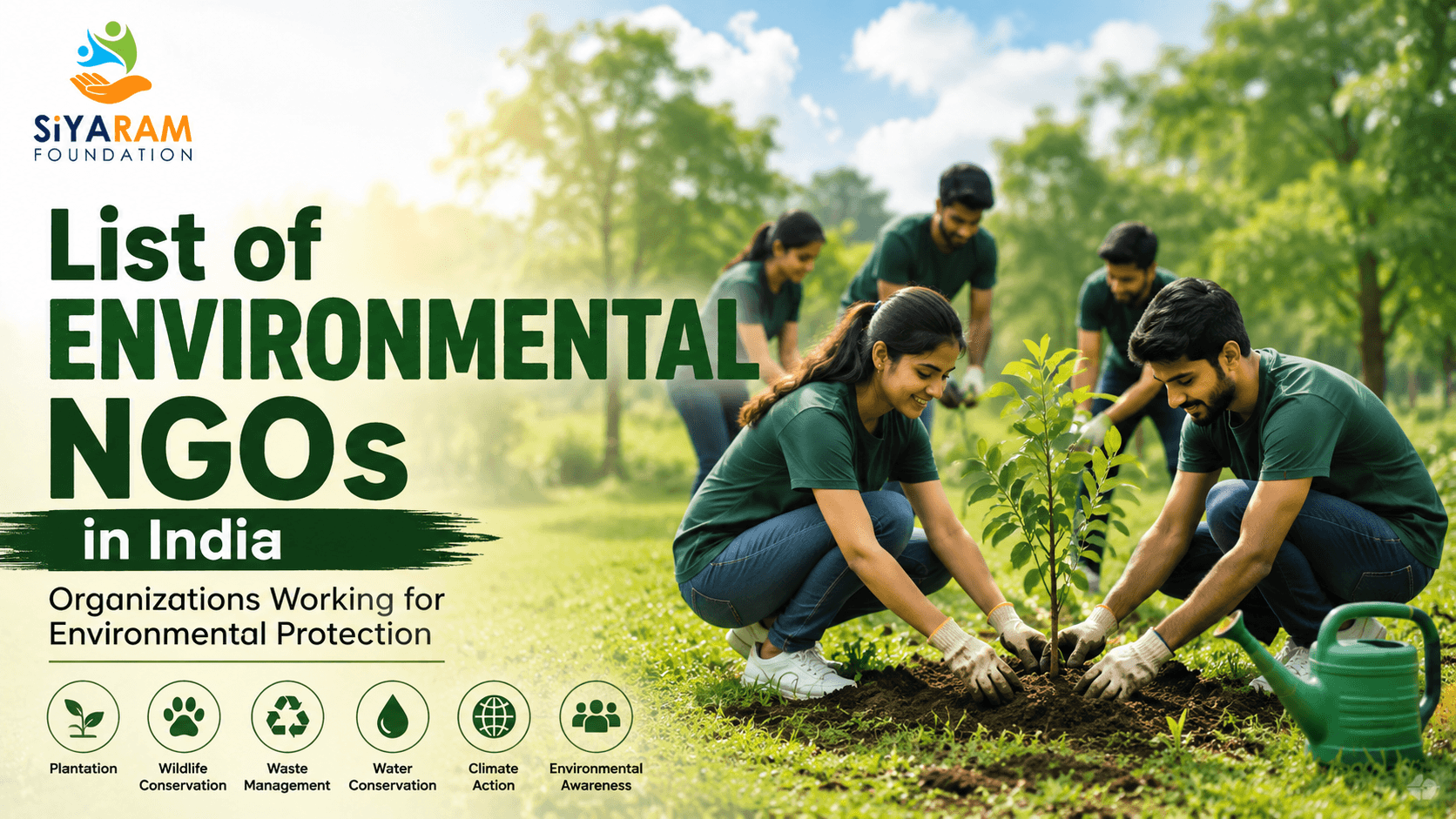
List of Environmental NGOs: Organizations Working for Environmental Protection
Environmental NGOs in India play an important role in protecting forests, wildlife, water resources, and biodiversity. They also work on climate awareness, pollution control, environmental education, and sustainable development.
Step outside in most Indian cities and you don't need data to tell you something's off the air feels heavier some mornings, the green cover keeps shrinking, and rivers that people once swam in are now just drains with a current. This isn't some future crisis anymore. It's already here, and it's the millions of ordinary people dealing with it who feel it first, long before any policy catches up.
Governments try, but policy was never built to reach every village, every riverbank, every street that actually needs help. That's the space non-profits have been filling for years now, mostly without much noise. If you looked up a list of environmental NGOs because you're thinking about volunteering, donating, or just want to know who's genuinely doing something, this should give you a decent starting point a look at what these groups do, a few names worth knowing in India, and some honest ways to get involved if you're interested.
What Are Environmental NGOs?
At the most basic level, an environmental NGO is a non-profit working to protect natural resources, outside the usual government setup. Some stay narrow a group focused entirely on river clean-ups, say, or one that only plants trees on degraded land. Others try to cover more ground at once: wildlife, pollution, water, climate policy, sometimes all under the same roof.
An NGO for environment protection doesn't always match the picture in your head. Sometimes it's a handful of people running plantation camps across a few districts, working on a shoestring budget. Other times it's a much bigger setup with research teams and legal staff. The size varies a lot, but what connects them is that none of them are waiting around for a government order before acting.
A lot of these groups also put real effort into education, and that part matters more than it gets credit for. Most environmental harm isn't malicious it happens because people just don't think about what their daily choices cost. A single classroom session on why plastic waste is a problem can, over time, do more good than one big clean-up event ever could.
Why Are Environmental NGOs Important?
You could ask why not just let the government handle this? The honest answer is that no single institution, however well-funded, can be everywhere at once. Environmental protection needs people actually present on the ground, and that's what an NGO for environment brings to the table.
A few reasons this work matters:
They reach places official programs often can't remote villages, informal settlements, areas that don't get much administrative attention. They turn complicated environmental problems into something people can actually act on, through workshops, campaigns, and direct outreach. Some keep watch over industrial pollution and illegal deforestation, and push back when the rules get ignored something not everyone has the time or standing to do. They bring people together. One person planting a tree barely makes a dent. A thousand people organized around one campaign can shift a whole landscape. Restoration bringing back a forest, cleaning up a lake — takes years, sometimes much longer. NGOs tend to be the ones still around long after the initial attention has faded.
So when people talk about organizations working for environmental protection, they're usually talking about whoever's doing the slow, unglamorous work of turning good intentions into something that actually holds up.
List of Environmental NGOs in India
There's no shortage of environmental organizations in India some decades old, others newer and more focused. Here's a rundown of a few worth knowing about.
Greenpeace India
Greenpeace India is probably the name most people recognize first. Its work centers on climate change, clean energy, and pollution, and it doesn't hold back when calling out governments or companies that fall short. That's part of why it stays in the news so often the campaigns are loud and public by design. We've written more about its work in our blog on Greenpeace India and the bigger role environmental NGOs play across the country, if you want the longer version.
WWF-India
WWF-India's work is centered mostly on wildlife and biodiversity tigers, elephants, and the larger ecosystems they need to survive. A decent chunk of what it does also goes toward helping people who live near forests, figuring out ways for them to earn a living without having to eat into the same habitat they depend on.
Centre for Science and Environment (CSE)
CSE, out of Delhi, isn't really the street-campaign type. It's more research and policy work, the kind that happens quietly in the background. Next time you read a news piece citing air quality numbers or water pollution studies, there's a fair chance CSE's research sits behind it somewhere.
Bombay Natural History Society (BNHS)
BNHS has been around for a long while now, and its work documenting India's birds and biodiversity has shaped conservation policy more than most people realize. It's not flashy work, nobody's writing headlines about it, but it adds up over the years.
Wildlife Trust of India (WTI)
WTI handles wildlife rescue, habitat protection, and increasingly, human-wildlife conflict something that's only getting more common as forests keep shrinking and animals end up wandering into places they never used to. It works alongside government agencies on most of this.
Centre for Environment Education (CEE)
CEE's whole focus is education building programs for schools and colleges so environmental awareness isn't something people pick up as adults, if at all, but something they grow up with.
Siyaram Foundation
And closer to home Siyaram Foundation works on environmental protection through community-led programs: tree plantation drives, awareness campaigns, sustainability initiatives. The idea behind it is fairly straightforward. Change holds up better when the people living in a place are actually part of making it happen, rather than having a solution dropped on them from outside.
This list isn't complete, not even close there are plenty of smaller, regional groups doing solid work too. But it gives you a sense of the range, from research-heavy organizations to ones that are mostly hands-in-the-soil.
Major Areas of Environmental NGO Work
Most organizations working in this space end up concentrating their energy on a handful of areas. Here's what that usually looks like in practice.
Tree Plantation & Afforestation
This is probably the most visible kind of environmental work out there, and there's a reason for that — it's something you can actually see happen. A sapling goes in the ground, and a few years later, there's a tree. Afforestation helps with soil erosion, gives local wildlife somewhere to live, and improves air quality in areas that have lost a lot of their green cover. Several tree plantation NGOs in India run structured programs where volunteers, schools, and even companies can take part and actually see what their involvement produced.
Wildlife & Biodiversity Conservation
This covers a lot anti-poaching work, habitat restoration, years of tracking a single species before anyone sees real recovery. It's slow, often thankless work, but without it, a lot of what makes Indian ecosystems distinct simply wouldn't survive.
Climate Change
Climate work has moved up everyone's priority list lately, mostly because the effects are no longer abstract erratic monsoons, longer heatwaves, weather patterns that used to be rare and now aren't. NGOs here tend to push for renewable energy and get involved in fairly technical policy conversations most people never hear about.
Pollution & Waste Management
Air and water pollution remain two of the hardest problems India is dealing with. Organizations here focus on waste segregation, recycling, cutting plastic use, and sometimes monitoring industrial emissions when official oversight isn't keeping up.
Water Conservation
In water-stressed regions, this often means reviving old step-wells and ponds, setting up rainwater harvesting systems, and managing watersheds so groundwater has a chance to recharge naturally instead of everyone drilling deeper borewells.
Environmental Education
Nothing above really sticks without this piece. Once a plantation drive wraps up or a campaign ends, education is what keeps people caring long after the event itself is over.
How to Choose an Environmental NGO to Support
With so many options, picking one can feel like guesswork if you don't know what to look for. A few things worth checking before you commit your time or money:
Transparency do they actually share project updates, or is it all vague, feel-good language with nothing to verify? Focus area does their work match what you personally care about? Someone who loves wildlife probably won't feel as connected donating to a pollution-focused group. Local presence an NGO active near you makes it a lot easier to actually show up. Track record — how long have they been doing this, and is there anything to show for it? What they actually need some NGOs are short on funds, others need hands more than money. Match what you give to what they're asking for.
How You Can Support Environmental NGOs
You don't need any special background to get involved. A few starting points:
Show up for events plantation drives, clean-ups, awareness walks. Donate to an organization you've actually looked into, not just the first one that shows up in an ad. Talk about it. A lot of environmental apathy is just people not thinking about the issue at all. Adjust a few habits yourself less plastic, less water waste, more thought before you throw something away. If you run a business, consider a proper CSR partnership with a verified NGO instead of a one-time donation that gets forgotten by next quarter.
None of this needs to be dramatic. Small, steady effort adds up a lot faster than people expect.
FAQs
1. What is the main role of an environmental NGO?
Mostly, it's protecting natural resources through direct work, awareness, and community action covering ground that government programs alone don't reach.
2. How do I find a trustworthy NGO for environment protection?
Look for one that's upfront about its projects, shares updates regularly, and has some kind of track record you can actually check, not just claims on a website.
3. Can individuals volunteer with environmental NGOs in India?
Yes, most are happy to have volunteers for plantation drives, clean-ups, and awareness programs. Usually you can sign up directly through their website or social media pages.
4. What's the difference between wildlife NGOs and climate-focused NGOs?
Wildlife NGOs focus on protecting species and habitats. Climate-focused ones deal more with emissions, energy, and the broader policy side of things.
5. Do environmental NGOs only work on tree plantation?
No that's just the most visible kind of work. Plenty of NGOs also handle wildlife conservation, pollution, water conservation, and education.
6. How can businesses support environmental NGOs?
Through CSR funding, employee volunteering, or by partnering directly on specific projects, like a plantation drive or an awareness campaign.
7. Are donations to environmental NGOs tax-deductible in India?
A lot of registered NGOs qualify under Section 80G of the Income Tax Act, which lets donors claim a deduction. Still worth confirming directly with the NGO before you donate, since it varies.
Conclusion
No single organization is going to undo environmental damage on its own it takes sustained effort from a lot of different directions at once. The organizations covered above make that clearer: some plant trees, some protect tigers, some fight for cleaner air, and all of it counts for something.
Whether that means showing up for one weekend plantation drive or donating regularly to a cause you believe in, supporting the right environmental non-profit is one of the more direct things you can do for a future that's actually worth living in not just for us, but for whoever comes after.